
My story and why I believe this expedition is so important
11 June 2016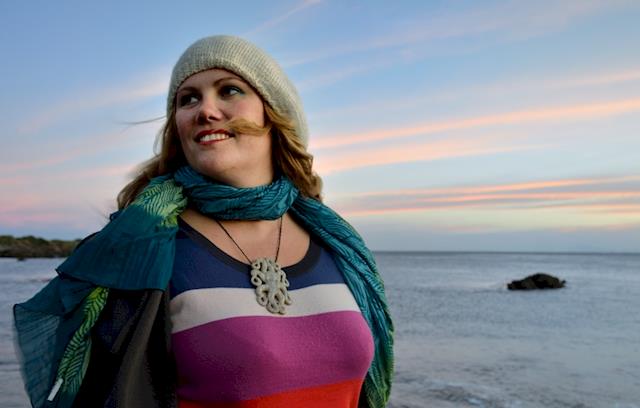
I’m Dr Sea Rotmann, a ‘roving behaviour change consultant’ from Wellington and I’m about to go on a life-changing journey to Antarctica with 78 other women scientists from around the world. I lead a large, international research project on behaviour change in energy, among other things. I own my own business called SEA – Sustainable Energy Advice Ltd and I’m lucky to count experts from various governments, large industry and world-leading academic institutions among my clients and my friends. I am regarded as quite an accomplished leader in my field, and yet I still suffer from the ‘affliction’ of having been born a woman sometimes. So I would like to share my story with you.
I was born in Graz, Austria to a poor family. Not one of us had been to University. My grandparents, who were born in 1912, experienced abject poverty, starvation and war. I grew up with a single mother in a tiny apartment where we shared a bedroom until I left home at age 17. My dad left us when I was four and never turned back. When he died of cancer years later, me and my 4 half sisters from 3 (ex) wives didn’t even know about it. He never gave us the chance to get closure or even go to his funeral. My childhood was not easy and yet it was still better than that of most women on this planet. As long as I could think - since I first set my eyes on the ocean during a holiday to Croatia - all I wanted to do was dive and save the ocean. When my mother gave me a Jacques Cousteau book on octopuses and squids at age 7, I disappeared into day dreams of becoming a marine biologist and chasing the fabled ‘Kraken’. There was just the minor problem that Austria was a land-locked country!
But I have always been very tenacious and never give up when I set my mind to something. So I left Austria age 20 and moved to Australia to pursue my childhood dream. I did indeed manage to become a marine biologist and had the life-changing opportunity to work and live in wild Papua New Guinea where I did my PhD on the environmental impact of a major gold mine on the surrounding coral reef. Despite the ubiquitous violence and poverty I witnessed there, I loved PNG and its people. I loved doing all the field work and the diving that comes with being a marine biologist. But I hated the rules of academia and that my highly-regarded University used extremely destructive methods to collect thousands of specimen from the reef, all in the name of ‘science’. I fought hard against this perceived injustice, and caused myself and the University a lot of drama chafing against this restrictive (and almost always white, male) authority. I wisely realised then that academia probably wasn’t for me...
As soon as I was finally a marine biology ‘expert’ with a PhD in coral reef science, I fell madly in love with a guy who I saw giving an interview about creating Gollum on the Lord of the Rings DVD extras. So I flew to New Zealand, went to the Return of the King premiere in Wellington, dressed as an elf, found Richard Taylor at a fan party and told him I was in love with his creature designer. Long story short, Richard introduced us and we ended up getting married a few years later!
This would be a great story despite the fact that we’re not together anymore - had I not managed to become geographically challenged, yet again. New Zealand has a distinct lack of tropic coral reefs, so I found it impossible to get a job in my chosen field and expertise. Instead, I ended up in various non-marine jobs and finally became the Principal Scientist of the Energy Efficiency and Conservation Authority. This is where I discovered the importance of changing behaviour if we really wanted to have a serious impact on climate change and reduce our energy use. I even got to represent New Zealand at the International Energy Agency. Human behaviour was not a topic often raised in this highly technocratic institution when I first got there, but it became more and more obvious that it was an issue of ultimate importance. It really was a case of being at the right place at the right time, and having talked to - and harassed - the right people about this issue over the years. Finally, I was asked to propose a new research task on behaviour change to the International Energy Agency’s Demand-Side Management Programme (www.ieadsm.org) and I have been leading this exciting work since 2012.
So, despite all the obstacles in my life – some of which I invariably created myself - I managed to pursue every dream and follow every goal I ever set for myself. I was so lucky being born in Austria to a single mother who saved every penny to let her only child move to the other end of the world, forever. But despite all this luck and tenacity, and even though I have had my own business and have been running an international research project for the last 4+ years, I still regularly encounter sexism, in all its various forms. Sexism has impacted my life since I was a child from sexual abuse, to sexual harassment, to being overlooked or patronised - even when I became ‘Principal Scientist’ or the leader of a global research programme. For example, I had to learn how to speak up forcibly and defend myself and other female scientists when some of our colleagues invariably became ‘grabby’ after too many drinks during international conferences. I have no doubt, and get reminded frequently, that I still live and operate in a club run by the ‘old white boys’. I still, regularly bang my head on the glass ceiling.
But it wasn’t always the ‘old white boys’ who caused me problems, in fact, they have often helped me as well, especially because they sometimes had paternal feelings where they wanted to support or ‘protect’ me. Sexism can very much also go in favour for women, or the other way. The worst bullying I have encountered in my life was often from other women, especially in the work place. There is no lack of sociopathic women, particularly in leadership positions. Maybe it is even a prerequisite that, in order to get to these lofty positions if you are a woman is to play by the "white man's" rules, which tend to be less-than-empathetic? Sexism and bullying by women can be just as, or even more toxic to women than men who harass or patronise us.
This includes the holy issue of motherhood. We all know that women with children often get discriminated against in the work place, and how wrong this is. However, if you, as a woman make the choice not to have children, you may encounter a different form of sexism. You may find yourself being pitied, or being told that you won’t ever comprehend ‘real’ love or the real issues unless you become a mother. I made the hard choice not to have children as part of my contribution to climate change. Partly, because I could not do my work which involves traveling 4 months a year if I had a young child and partly because I believe that this planet is at carrying capacity. I knew I had to sacrifice something – my dream to ‘save the world’ or my dream to be a good mother. I do not want to imply that some women can’t have or do it all – I know there are super women who can juggle having a high powered career and being a good mother, often with the help of a strong support base, including their partner. I just knew that I wasn’t one of them. I had to choose which path I was going to give my full attention to – this seems to be a hard choice mainly women need to make, especially in science.
None of what I am telling you is meant to be a complaint or a sob story but an illustration of how insidious sexism is, and how it affects all of us in so many different ways. I lead an exceptionally fulfilled life and have no regrets for having made any of my sacrifices – leaving my home country, family and friends; leaving my dream profession which I spent 10 years studying for; leaving my husband and the idea of motherhood… I know how incredibly lucky I am that I, as a young girl from a poor Austrian family, could end up with a PhD in marine biology and now being regarded as a ‘world expert’ in something as interesting and important as how to change human behaviour. I also realise that my grandmother or mother, and the majority of women on this planet still do not have the opportunity to make these kind of choices and that I am in the lucky 5%. I want to become the kind of woman leader that can help other young girls and women be able to follow their dreams and goals.
I have gotten the chance of a lifetime to do so: a leadership expedition for 78 women scientists to Antarctica, called Homeward Bound (http://homewardboundprojects.com.au/). This expedition is meant to teach us all there is to know about leadership and strategy, to give us the tools and networks to become the leaders the world so urgently needs – and that includes the old white boys’ club! I believe that having the chance to go to the single most important place in terms of climate change, with 78 other hugely inspiring women and being taught intensively about all these issues we are facing, will make me a better person, woman and leader. Then I can share my story more effectively and use this knowledge to empower other women. This is my fundraising page to afford this expedition and if this story inspired you, and you believe that I will use this experience to share my knowledge and make this world a better place, please donate here: givealittle.co.nz/cause/drsea