Back to page

Support and rebuild Chalish Village, Nepal

  • Update for Tej - 17 June 2015

      17 June 2015

    Chalish relief distribution and rebuilding committee departed 20 youths to Chalish village on 16th.June.2015 with the mission of :

    - Demolish risky houses after mega earthquake hit and regular aftershock in chalish.

    - To set up monsoon proof temporary shelter in Chalish.

    - Interact with villager, intellectuals, VDC representative and local political representatives about rebuilding chalish village issues.

    - Fun activities to forget the tragic of earthquake’s hit in Chalish.

    Coordinator Kul Gurung and sub coordinator Tej Gurung will join at village with the rebuilding equipment by Helicopter while another active member Chandra Gurung is departing on Thursday with three foreigner volunteer. At the same time, team leader Himal Ghale is leading youths to get to Chalish village. Some of members Rankesh Gurung and others will be joining from Dhading headquarter Dhading bensi with the team. Other active members as Harka gurung, Paul gurung, Karsing gurung and others are staying at Kathmandu to coordinate if anything need from Kathmandu to deliver to Chalish village for setting up temporary shelter.

    Thankful to Ram sapkota ( Kamal) jee founder of Tuki Nepal for providing rebuilding equipment equivalent to $ 1000 for Chalish village.

    Sub coordinator

    Tej Gurung

    Chalish relief distribution and rebuilding committee, Kathmandu
      0 comments  |  Login to leave a comment
  • Update from Tej - 22 May 2015

      26 May 2015
    Main image

    Immediate relief material reaches Chalish

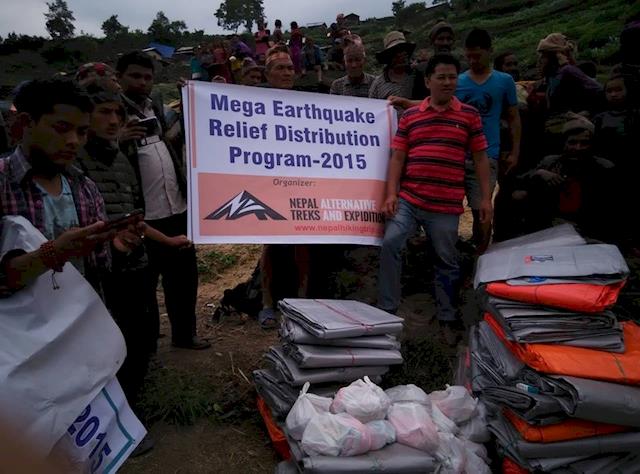
    Tej was able to get to Chalish by helicopter today and through his company Nepal Alternative Trekking Expedition (NATE) distributed 500 KG of relief materials to the village, 70 pieces of North Face clothing, 70 tarpaulins and 70 packs containing salt, oil, paper, matches, soap, sugar and instant noodles. These were urgent needs. Tej also used the opportunity to survey the housing situation.

    Survey of housing

    As the monsoon season is fast approaching (within 15 days) villagers are busy looking for shelter whilst trying to rebuild their houses. They are living in temporary shelter made of wood and bamboo and using tarpaulins as roofing material. Unfortunately these constructions will not be strong enough to resist the monsoon. For those three months of monsoon, the tarpaulin sheets will not be enough. Communities need corrugated metal roofing sheets, which will give them cover from the harsh rains.

    Better shelter is an urgent requirement. The government announced a distribution of Rs. 15000 ($175CAN) per household for shelter. This covers only about 75% of the cost of a proper shelter against the monsoon and thus greater assistance will be needed.

    Tej visited every single house and discussed with the villagers about our progress and our plans to rebuild Chalish. They expressed similar concerns as us in that any rebuild will need to be in accordance with earthquake resistance specifications.

      0 comments  |  Login to leave a comment
  • Update from Tej - 14 May 2015

      21 May 2015
    Main image

    Update from Tej Gurung to the Rebuild Chalish Facebook page on 14 May 2015.

    If you look at a map of Nepal, you will see an area northwest of Kathmandu called Dhading, and you'll notice a large area of 3,200 sq km without roads. This is common in Nepal. The village we are supporting, Chalish, is right in the middle of this area, three days distance on foot from the closest road.

    Most international relief teams do not go to the regions of Nepal that are without roads for two reasons. First, trucks can’t get there, and second, the strategy of NGO's is to help the greatest number of people possible, which means that they sometimes have to neglect difficult-to-access villages which have small populations. This is always a heart breaking choice, but it is one of the duties of the international organizations to use their resources to achieve a maximum impact. The Pareto 20%-80% rule.

    Therefore it is left to the initiatives of local people to find the supply stores that may still have some material to donate (many stores are now empty, with nothing left or supplies having been destroyed by the last earthquake), to transport this material to the village, and to transport back the injured people to the closest hospital. This is what Tej has been attempting to do all week. The three-day trek to Chalish has been blocked by landslides and damaged bridges. Tej and co-leaders of neighbouring villages have sent 100 workers to open the trails. Meanwhile helicopters are used to bring urgent supplies. This delivery system has been delayed by the search for the US helicopter that is missing; everyone is hoping for it to be found and that the US-Nepali team aboard is safe. Tej and other local teams are now looking for available helicopters to help them with their own relief efforts, but up until today they have had no luck. Tej and his team hope to find an helicopter and reach Chalish tomorrow.

    Please note that our fundraiser is dedicated to the reconstruction of the village infrastructure and that this phase will begin only once the first phase of immediate relief is coming to a close. In the meantime, the local committee is working on the plans which we will inform you of as they develop over the coming weeks and months.

      0 comments  |  Login to leave a comment
  • Update from Tej - 20 May 2015

      21 May 2015
    Main image

    Update from Tej Gurung on 20 May 2015

    Usable both certainly challenging trails

    Yesterday, some progress was done. I have been coordinating with the « Himalayan Health Care » who has been working in our area for health service. They helped us take our equipment to Sertung (15 minutes walk from Chalish). We will then be opening this section of this route. We have divided the group to open the route. Some starts from Ghyangsang, some starts from Jharlang, Some starts from Borang, Some starts from Sertung and Chalish.

    I am also coordinating with World Food Program ( WFP) to provide relief materials to our area. They listed our village as a first priority. So, hopefully, we will get something from them too.

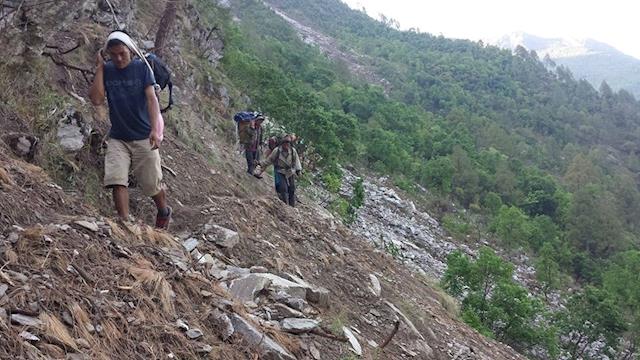
    Here are some pictures of the most difficult part to clear on the trail to Chalish village from Ghyangsang. It is between Jharlang and Borang village. This place is called Lisne river.

    These pictures are provided by local people (refer to th gallery). It is a dangerous part of the trail. Stones and landslide falls very often. If the route is clear, mules can supply the relief material and Chalish village have mules.

    Tej

      0 comments  |  Login to leave a comment