Back to page

The Failed Farms

  • Update 2

      7 April 2015

    This is our second update as we head in to the final month of our fund raising to enable us to do the pre-production phase of our feature length film about the valleys adjoining the Whanganui River settled by soldiers returning from the First World War.

    We recently fully funded our ‘River Rats’ film about ‘Baldy’ Baldwin and as mentioned in our first newsletter however this next one is far too big for us to do alone. We have now shown ‘River Rats’ to audiences in three provincial theatres and received very positive reports from all screenings. However, so far our fund raising has not matched the enthusiastic responses of the screenings and is not progressing as well as we had hoped.

    It would seem based on the stats for the give-a-little web page that nowhere near as many people that receive our newsletters have visited the page. Checking it out does not necessarily mean you have to contribute, but you will see what we are endeavouring to do and if you are able to provide a little support, you will be part of the making of a film that will benefit the region and help to educate coming generations about this interesting aspect of our nations history.

    We would like to introduce Alex Funke and Holly Osten, a couple of the newer members of our production team. Alex is a native Californian who came to New Zealand in 1999 after being approached by Peter Jackson. Alex had become a bit of a whizz at cinematic special effects having won an oscar for his work in ‘Total Recall’ and Peter wanted him to assist with the production of the ‘Lord of the Rings’ trilogy. Alex indicated that if he liked Wellington and New Zealand, he would assist otherwise he would stay in the US. Alex has been living in Wellington for the past fifteen years and now has New Zealand citizenship so I guess that indicates his love for this country. Working on the ‘Lord of the Rings’ bought him two more oscars and now his desire is to become more involved with the country and our people and is keen to be a major part of the film we are making.

    Holly is 20 years old (intellectually going on 40) and is in her final year of studying theatre and film at Victoria University in Wellington. She is full of energy and a real go geta who loves to play and create her own music as well as being addicted to documentaries. Her future goals include to continue to develop her innate, communication and creative skills, to producing a theatre show and a film and to get to know New Zealand and its stories.

    Holly went with us to Whakahoro recently and the following is her description of the last part of the journey.

    Turning westwards off state highway one at Raurimu, it was all gravel roads, bush and multi-layered sky high cliffs – all making you feel very small. This feeling was soon to pass at the meeting of the full of life Dan Steele. He radiates energy, passionately explaining the valley around us and the wild life that threatens it. Experience is written all over Mr Steele’s face as he reads the river like a book while driving his Jet boat at what seems a breakneck pace down river through the numerous rapids.

    The night brought us a trip over the swing bridge to the secluded lodge where we stayed. Having learnt about the river and the inhabitants living along its banks including the families who still farm along it and the animals that call the river home.

    The next day brought another fascinating encounter with a great character, Maggie. She spoke about the Blue Duck Station and the services it offers, the people she meets and the restoration of history now placed into their hands. It was all very exciting, but nothing could prepare us for the ride ahead.

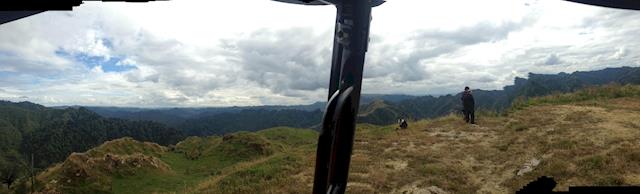
    Four wheels, a camera, three people and a track almost as old as the valley – no words can be written to describe the experience of going to the top of the hill to check the sheep and cattle. A trip up that felt almost like your last. Totally worth it.

    Go to the Blue Duck Station - you will be missing out not to. It’s beautiful, educational and special. I learnt so much and it made me ponder my life. The experience of the trip solidified the reason of why we need to make a movie about this extra-ordinary place comprising the Mangapurua and Kaiwhakauka valleys.

    We would like to reward those who are willing to assist us and anyone who donates at least $20 will receive a DVD of the movie once its premiere has been screened. We will have a need for quite a number of extras and although we will not be able to pay for their time, we will cover all expenses and anyone contributing over $100 will be invited to assist in this part of the film-making process.

    Thank you for reading this far and we hope to hear from you sometime soon.

    Kind regards

    The Capital Video team.
      0 comments  |  Login to leave a comment
  • Whakahoro visit

      2 April 2015
    Main image

    We have just returned from an extremely good trip to Taihape with a good turnout at the Majestic Theatre to watch 'River Rats'. One of the best attendances in their theatre in recent times.

    We also went through to Whakahoro and were very well looked after by Dan and Anna Steele of the Blue Duck Station and would like to thank them for their kind hospitality. They have an amazing operation there that encompasses their large sheep and cattle farm which also includes honey production and tourism facilities.

    The one interesting aspect of their property is that it includes six of the original farms in the Kaiwhakauka Valley allocated to returned soldiers from the First World War, part of the larger area which also included the Mangapurua Valley, the site of the 'Bridge to Nowhere'. Both these valleys will be included in our forthcoming film detailing the abandoned farming settlement scheme.

      0 comments  |  Login to leave a comment
  • Newsletter One

      23 February 2015
    Main image

    The Valleys of Abandoned Dreams

    Capital Video Productions Ltd has just recently commenced screening its well received documentary film 'River Rats' and is now hoping to be able to make a start on another and closely related project. 'River Rats', details Robert 'Baldy' Baldwin’s enduring attraction to the Whanganui River and starts with his early canoeing adventures down the river progressing to the more recent building of his replica historic riverboat, the 'Adventurer II'. It also tells of how he suffered a debilitating stroke not long after launching his boat and his subsequent recovery and achievements.

    During the making of this film, we became aware of the history of the Whanganui River and the area surrounding it and were fascinated about the foresaken farming settlements in the Mangapurua and Kaiwhakauka Valleys. This aim of this new documentary will be to explore these ‘Valleys of Abandoned Dreams’ from the period around 1917 up to the present day, from the perspective of the people involved.

    A Folklore is Created

    Land in the Mangapurua and the nearby Kaiwhakauka Valleys was offered to soldiers returning from military service during the First World War under the Discharged Soldiers Settlement Act of 1915. At the height of settlement, almost forty returned servicemen and their families resided in the these valleys.

    It has become enshrined in New Zealand folklore that the soldier settlers could not cope with the environmental and economic conditions of the day and just walked off their farms. However there is evidence that shows significant aspects of the soldier settlers' stories have been misunderstood and misrepresented for many reasons. This traditional notion of failure is also closely tied to assumptions about the high cost and poor quality of land involved and the inexperience and under-capitalisation of the settlers.

    The distribution of the land and the on-going support for settlers by the Government was the result of a deliberate policy in response to uncertain economic conditions during that period. That the farming experience was not as the soldiers expected, the dominating image to have survived is that the soldiers were betrayed and this was based upon the strength of their moral claims to recognition and recompense from the community for which they had fought.

    Given some of the intriguing decisions made by the governments of the day, including the building of the iconic concrete bridge now universally known as “The Bridge to Nowhere”, (that when finished served no farms and was seldom used), it’s little wonder that the valleys prosperity waned. However with everything that was aligned against the settlers, some did manage to survive reasonably well and in the end it was not any ineptitude on their part that the scheme was destined to collapse, but from factors very much outside their control.

    Significant Environmental Impact

    The failure of the development scheme is, in itself, an important historical event that not only marked the end of the use of such schemes but also led to a better understanding of New Zealand's environment and the effects intensive land clearance and farming activity would have on those lands. It was the last, large-scale, back-country pioneering development scheme in New Zealand and later, much smaller re-settlement schemes, based on the use of more suitable lands, were used for the settlement of discharged soldiers during and shortly after the Second World War.

    The Mangapurua and Kaiwhakauka Valleys were also representative of the form of social environment in which many of New Zealand's rural communities developed in the first half of the twentieth century. With only the most basic of communication infrastructure, localities such as these formed tight communities where the primary sources of assistance, friendships, and social events occurred within their community.

    Many stories abound of some of the more memorable events and festivities that occurred in these valleys, from the first moments they were settled up until the last family left. In this study, we will interview descendants of these settlers, some having grown up in the valleys, to discover what life in this remote region was actually like, especially with the very necessary close co-operation needed between neighbours. Our documentary will create re-enactments of some of the memorable and mundane aspects of a way of life enacted late in New Zealand’s rural development no longer seen nowadays.

    This film will preserve and may be the last opportunity to capture many of these stories. Coupled with the strong bonds between the families of the original settlers and their descendants’ continued relationship with the area, this documentary will breath life into their stories.

    The Modern Perspective

    An ongoing feature of the valleys is that they are now being frequented far more regularly than they were during their farming heydays. Now included in New Zealand’s 3000km Te Araroa trail, stretching from Cape Reinga in the north to Bluff in the south, these valleys see thousands of walkers and cyclists every year, experiencing the remoteness and tranquility of this part of the Whanganui River National Park.

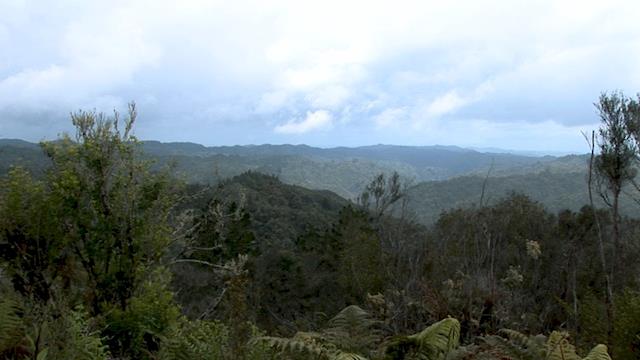
    Today large tracts of the valley have become overgrown with ponga ferns and regenerating native bush and only a few remains of the abandoned scheme exist. These include the Mangapurua Road, stands of exotic trees, culverts and some scattered evidence of bridges and the soldiers' residences and farming development work.

    Making a film of this intriguing aspect of New Zealand’s rural development will be an extensive undertaking given the remoteness of these valleys, the need to re-enact past events on location and the need to utilise a riverboat for much of the filming. We are now planning to commence the pre-production phase involving the research and outlining of the story. To help illustrate this exciting adventure that we now wish to embark on, we have made a short promo film called ’The Failed Farms’.

    We produced the ‘River Rats’ documentary using our own resources along with the grateful assistance of Baldwin Adventure Tours Ltd. This project however, which we feel is such a significant story that needs to be told to a wider audience especially given the attention that the centenary of the First World War is beginning to generate, is one that we do not have sufficient resources either financially or from a manpower perspective to undertake on our own and we require your assistance.

    We are now seeking partners to share this project with and would be grateful for any help, financial or otherwise. Our initial goal in order to complete the pre-production stage is to raise $10,000 by the end of April and to achieve this we have set up a donation page on the 'Give a Little' web site. Join with us on this exciting and worthwhile adventure and help with a few dollars to get the project started at http://www.givealittle.co.nz/cause/thefailedfarms and forward this newsletter on to anyone else you think may be interested.

    Our previous documentaries are at: http://www.movies4u.kiwi.nz

    © 2015 - Capital Video Productions Ltd • http://www.capitalvideo.co.nz

      0 comments  |  Login to leave a comment