Back to page

Run To The Kermadecs! BLAKE Expedition 2021

  • Expedition Cancellation

      6 March 2021

    On Thursday night our expedition to the Kermadec Islands was cancelled. The latest lockdown significantly impacted on the Navy's schedule and has not left an opportunity for the expedition crew to join HMNZS Canterbury.

    It is difficult to speculate on how yesterday's earthquakes would have impacted the voyage, but at that time the Canterbury would have been anchored just off Raoul Island.

    It is gutting to miss out on this voyage, however, the BLAKE NZ team are currently investigating options for a programme later this year.

    The late Sir Peter Blake had a vision for a thriving and sustained natural environment. However, most importantly, he believed in inspiring others. Being part of the BLAKE Expedition crew was not only about exploring one of the world's most pristine environments, but it was also about spreading the word - for the Kermadecs, BLAKE NZ, and the need to take action. I hope that you have been able to learn something new and take an interest in these things.

    Please send me an email with a bank account number and I will be in touch about refunding your donation. My email address is: ethan.mcc45@gmail.com
      0 comments  |  Login to leave a comment
  • Lockdown Update

      2 March 2021

    Hi Everyone, I initially had an update planned for a few days ago, but due to the latest lockdown I have reverted to another much shorter update.

    The BLAKE Expeditions crew was due to assemble at Devonport Naval Base on Sunday morning with the boat departing twenty-four hours later. With Saturday night's lockdown announcement we are currently waiting to see if the expedition will be cancelled or postponed. At this stage, it's fingers crossed that there will be a postponement. Personally, I am optimistic that the expedition will go ahead, it's just a matter of when.

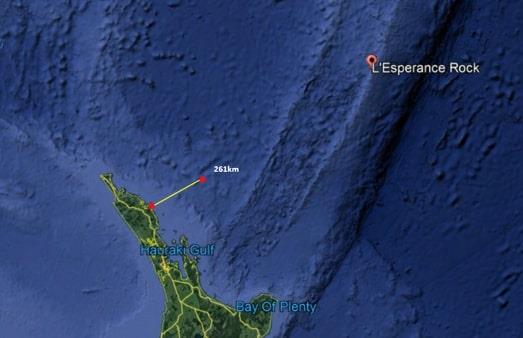
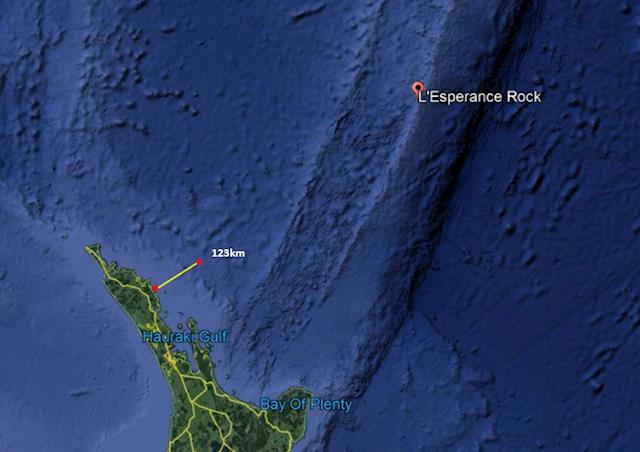
    My running target was set at 730km - the distance from New Zealand to the Kermadecs. My final mileage total has come back at 525km. While I haven't hit my intended target, I will continue running once I return and will be closing the gap with some lockdown runs in the interim.

    Thank you for all your donations and support! It is greatly appreciated and all goes towards the awesome work undertaken by BLAKE NZ. I will keep you all updated with developments in the next few days.

      0 comments  |  Login to leave a comment
  • Weeks Four, Five, Six

      19 January 2021
    Main image

    The Kermadec Islands have a fascinating history from the First World War. As New Zealand's Northernmost outpost, they formed the closest thing to a frontline on the home front.

    In 1916 the German Navy was bottled up in the North Sea and without the option of a head-on offensive against the Royal Navy, it converted to cunning tactics. Assaulting the sea lanes had potential to weaken the Allied jackboot.

    In December 1916 three fast-moving German raiders disguised as neutral merchant ships slipped through the Allied Naval blockade and set off to wreak havoc against shipping. One of these wolves-in-sheep's-clothing was the aptly named SMS Wolf.

    Wolf circumnavigated New Zealand before stopping off at Raoul Island (the main Island in the Kermadecs) in May 1917. Here the crew tinkered with the engines and ate abandoned crops left behind by evacuated farmers.

    On 2 June the cargo ship Wairuna was spotted and its crew made to surrender. Wairuna was promptly scuttled, and so began SMS Wolf's prolonged spree around the New Zealand coast in which two ships were sunk and thirty lives lost (five were claimed by a mine that beached North of Raglan in 1919).

    It wasn't until February 1918 that Wolf's presence was noticed in New Zealand waters, but by that time the ship was untouchable.

    Another tale from the period is that of Count Felix Von Luckner. Von Luckner captained the raider SMS Seeadler - which ran aground on a coral atoll in 1916. Von Luckner navigated the marooned Seeadler's lifeboat an astonishing 2000 miles in search of a vessel to hijack.

    However, upon arrival in Fiji his disguise was beaten by a suspicious sailor. Von Luckner was interned on Motuihe Island to enjoy the rest of his wartime service.

    Not content with golden beaches and perhaps Auckland weather though, Von Luckner and ten others capitalised on the camp's lax security, stole it's motor boat, and hijacked the logging vessel Moa. Amazingly the sluggish ship made it all the way to Raoul Island before its gallant pursuit came to an end.

    Upon capture Von Luckner remarked, “You left the door open. You cannot blame me for walking out!” Accordingly, the cheeky yet chivalrous captain was held as something of a folk hero in New Zealand.

      0 comments  |  Login to leave a comment
  • Week Three

      29 December 2020
    Main image

    Few realise that the Kermadec Islands have a Cold War history. If it weren't for the decisions of one man, the islands could have become a nuclear testing site!

    By 1955 it had been a decade since the world had entered the nuclear age, and it had also been six years since the Soviet Union had detonated their first atomic bomb. Despite laying the foundations for and playing intimate role in the American Manhattan Project, Britain found itself somewhat isolated at this stage in the Cold War arms race.

    The United States had denied Britain the ability to utilise their nuclear test sites and furthermore had barred all other nations from piggybacking on its nuclear research programmes. Keen to assert itself amidst the great nuclear powers of the day, Britain scoured the edges of its Empire for test sites, settling on inland Australia as a viable candidate.

    Starting from 1952 The United Kingdom performed twenty-three atomic tests in Australia. However, by 1955 a brick wall was hit - Australians would not permit testing of the far more deadly and dangerous Hydrogen Bombs.

    In May 1955, British Prime Minister Winston Churchill contacted then Prime Minister of New Zealand Sidney Holland with a request to put the Subantaractic Islands between the crosshairs of a Hydrogen Bomb. This request was denied.

    One year later the newly minted British Prime Minister Harold Macmillan wrote a personal letter to Holland. He requested that the Kermadec Islands be used as a testing site, stating "I am sure that we can count on you for co-operation in a project that is so important to the Commonwealth and the defence of the free world."

    However, amid growing anti-nuclear sentiment and an upcoming general election, Holland stayed steadfast.

      0 comments  |  Login to leave a comment
  • Week One and Week Two

      21 December 2020
    Main image

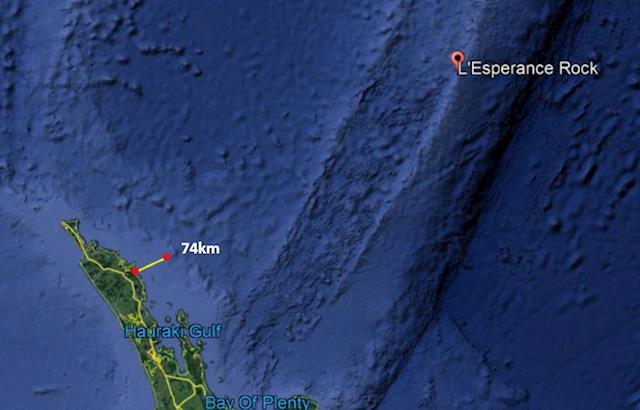
    First two weeks down and 74km done! So, it's time to get the weekly updates started!

    To begin, I'd like to share some basic facts. The Kermadec Islands are a 2600km long chain nestled between New Zealand and Tonga. Despite there being Nikau Palms, Pohutukawa, and Tui, the climate is much more tropical. The mean monthly temperature in February sits at a pleasant 22.4°C.

    The Kermadecs consist of six main islands, the largest of which is Raoul Island. This active volcano is home to New Zealand's northernmost outpost, Raoul Island Station, which is permanently manned by a handful of DOC rangers.

    Māori lived on the islands in the 14th Century, however, no inhabitants were found when Europeans arrived in 1788. The introduction of Kiore (Pacific Rats) and Feral Cats devastated birdlife and reduced seabird colonies numbering in the millions to mere tens of thousands. Adding to this damage, Feral Goats converted the dense forests of Macauley Island to a flat, rolling pasture.

    However, despite these gashes, the Kermadec Islands remain one of the most pristine destinations in the Pacific Ocean. The Marine Reserve surrounding their shores teems with marine life left undisturbed for thousands of years.

      0 comments  |  Login to leave a comment